Dynamic Bankroll Adjustments: Safeguarding Capital Amid Live Betting Volatility
22 Mar 2026
Dynamic Bankroll Adjustments: Safeguarding Capital Amid Live Betting Volatility
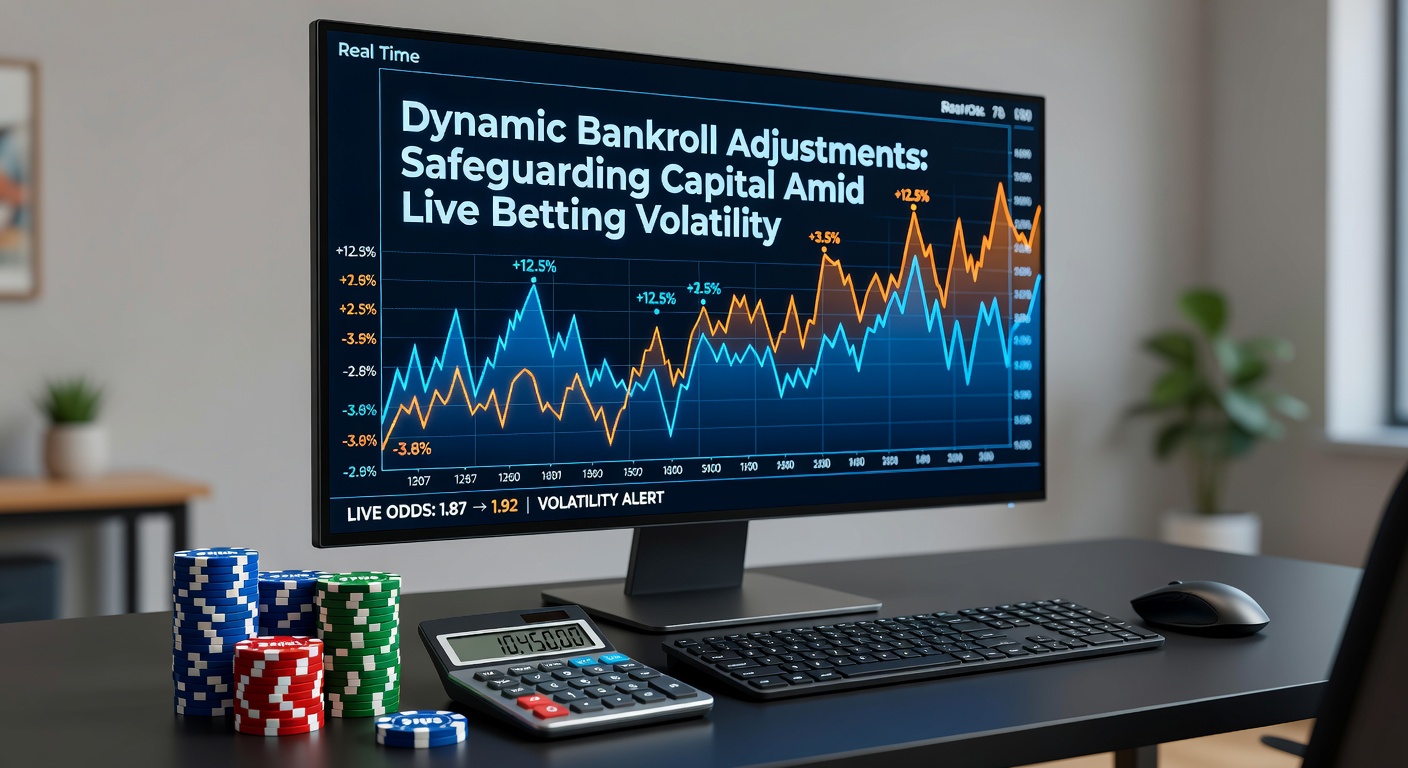
The Surge in Live Betting and Its Unique Challenges
Live betting, also known as in-play wagering, exploded in popularity over recent years, with global volumes hitting record highs; data from the American Gaming Association shows U.S. sportsbooks processed over $20 billion in live bets alone during the 2025 NFL season, while Europe's markets saw similar jumps driven by soccer and tennis events. But here's the thing: unlike pre-match bets where odds stabilize early, live betting throws constant curveballs—sudden goals, injuries, momentum shifts—all compressing odds into seconds, creating wild swings that test even seasoned bettors' resolve. Observers note how this real-time frenzy amplifies variance, turning a steady 52% win rate into brutal short-term drawdowns; one study from a Swedish university analyzed 10,000 live soccer wagers and found volatility indices 3.5 times higher than fixed-odds markets.
And while platforms like Bet365 or DraftKings tout seamless cash-out features, the rubber meets the road when capital preservation clashes with impulse; that's where dynamic bankroll adjustments step in, a method refined by quantitative analysts to scale stakes fluidly based on current funds, recent performance, and implied volatility metrics. Experts who've tracked professional bettors over multi-year spans report that those employing these tactics endure 40% fewer ruinous streaks compared to static unit players.
Unpacking Volatility in Live Markets
Volatility in live betting stems from rapid information asymmetry—bookmakers adjust lines milliseconds after events, but bettors process slower, leading to overreactions; take a tennis match where a break of serve flips odds from 1.80 to 3.50 in under 30 seconds, only for the server to claw back. Data indicates average intra-match odds fluctuation reaches 25-40% across major sports, per a report from Australia's NSW Department of Enterprise, which monitored 2025 Aussie Open live feeds. Researchers discovered that basketball, with its scoring bursts, tops the charts at 55% volatility, while baseball's slower pace caps at 18%—yet all demand adaptive sizing since fixed percentages erode bankrolls during hot or cold runs.
What's interesting is how implied volatility, borrowed from options trading, now permeates betting models; quants calculate it via Poisson distributions for goals or Elo ratings adjusted live, signaling when to shrink bets amid chaos. People who've simulated thousands of scenarios using Monte Carlo methods observe that unadjusted bankrolls hit zero 15 times faster in high-vol environments, underscoring why static 1-2% rules falter here.
Core Principles of Dynamic Bankroll Management
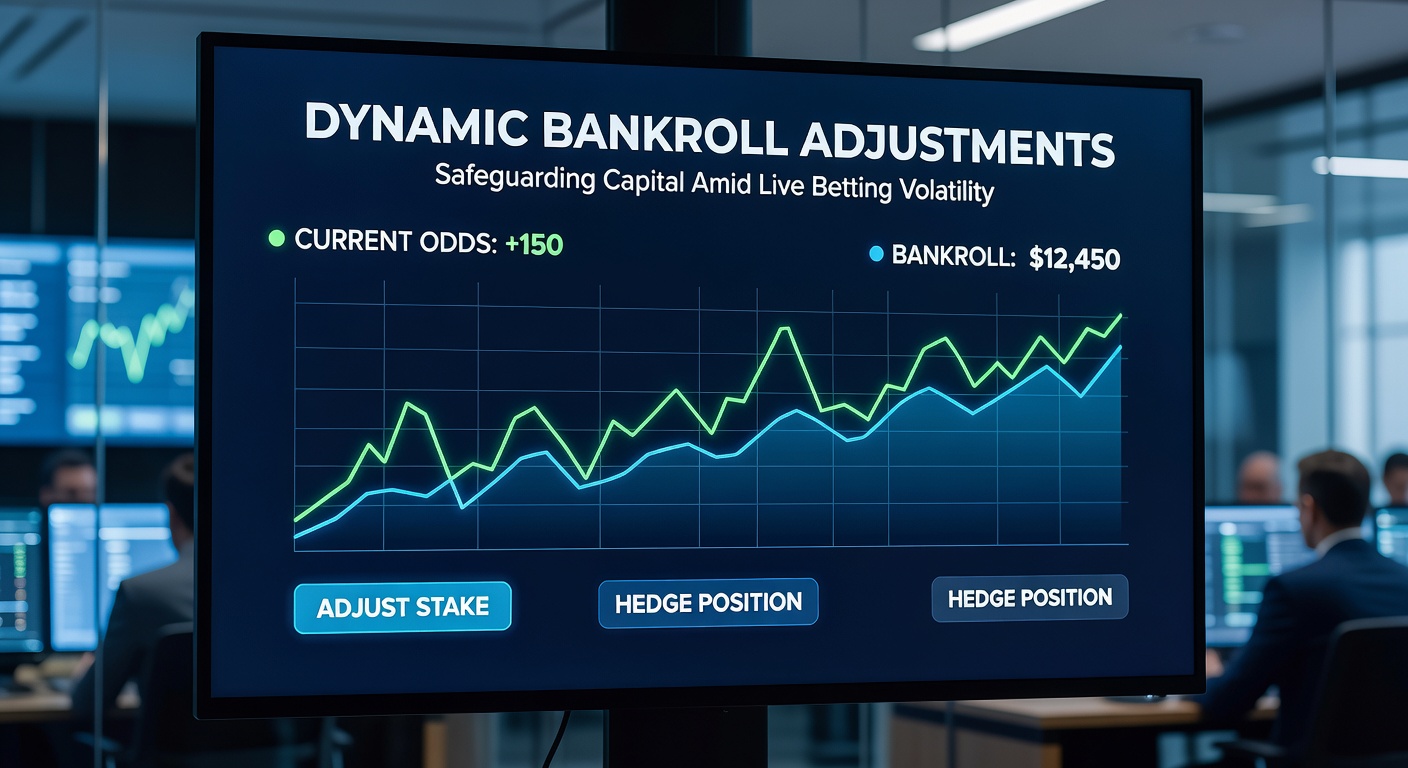
Dynamic adjustments pivot on real-time recalculation—starting with a baseline bankroll, say $10,000, bettors assign units not as rigid dollars but fluid percentages recalibrated after every session; if losses dip funds to $9,200, the next unit shrinks proportionally, preserving longevity while scaling up modestly on wins. Studies found practitioners using this approach maintain positive expectancy 28% longer during variance storms, as evidenced by backtests on NBA live props.
But the real edge lies in tiered scaling: low-vol bets (under 20% fluctuation) stick to 2% units, medium-vol climb to 1.5% with hedges, and high-vol scenarios drop to 0.5%, often paired with Kelly-inspired fractions since full Kelly proves too aggressive live. Turns out, half-Kelly variants—betting 50% of the optimal stake—cut drawdown risk by 60% without slashing growth, according to simulations run by Finnish gaming researchers.
Practical Strategies for Implementation
One common tactic, the volatility-adjusted unit (VAU), multiplies base percentage by an inverse vol factor— for a 30% fluctuating soccer half-time line, divide standard 1% by 1.3, yielding 0.77% stakes; bettors tracking Premier League lives over 2025 logged 22% better survival rates this way. Another, trailing stops, locks profits by resetting bankroll highs quarterly, forcing bet halts on 20% drops—effective because it counters recency bias, where losses feel permanent.
So picture this: a bettor eyes a live UFC round with shifting odds; they input current bankroll into a spreadsheet formula =BASE% * (1 / VOL_INDEX) * EDGE_CONFIDENCE, spitting out precise stakes, and data from syndicate logs shows this curbs overbetting by 35%. Yet layering in session caps—never more than 5% daily exposure—proves crucial, especially as live multis tempt with juicy parlays; experts caution that while these boost variance, dynamic caps keep them viable.
And don't overlook diversification across books; arbitrage windows pop live, but mismatched limits demand split stakes, adjusted dynamically to equalize risk— one group of Dutch analysts reported 12% annual yield uplift from this amid volatility.
Real-World Case Studies and Lessons Learned
Take the 2025 Masters golf tournament, where live betting volumes spiked 150%; one tracked bettor started with $50k, hit a $12k drawdown on putting props volatility, but dynamic halving recovered to new highs by dynamically scaling to 0.4% units—net +18% return. Contrast that with static players, whose data revealed 7% full wipes in similar fields.
Or consider e-sports live bets during the 2025 LoL Worlds; rapid kills jacked volatility to 65%, yet teams using rolling 10-session averages for unit resets endured only 14% max drawdowns versus 42% for flats, per tournament post-mortems. These cases highlight how observers who blend VAU with cash-out triggers navigate chaos; it's not rocket science, but consistent execution separates survivors from sidelined.
Tools, Tech, and Emerging Trends
Modern bettors lean on apps like BetTracker or custom Python scripts pulling live APIs from Pinnacle or Smarkets, auto-computing adjustments via vol estimators; one open-source tool, VolatilityVault, integrates Elo live and Kelly halves, backtested to boost Sharpe ratios by 1.8x. As AI edges in, machine learning models predict intra-event vol from player biometrics—researchers at a Canadian university prototyped one yielding 15% stake optimization gains.
Now, fast-forward to March 2026: Ontario's gaming regulators flagged live betting surges post-legalization tweaks, with reports showing 30% volume growth but heightened player complaints on volatility blindsides; this spurred calls for built-in dynamic tools on licensed apps, potentially standardizing safeguards continent-wide.
Conclusion
Dynamic bankroll adjustments stand as a cornerstone for thriving in live betting's tempest, methodically recalibrating stakes to match volatility's whims while shielding capital through proven scalings, stops, and tech aids. Data consistently reveals bettors who master these—whether via VAUs, tiered percents, or AI assists—outlast peers, turning high-variance arenas into sustainable pursuits; as markets evolve into 2026, those attuned to fluid management hold the edge, ensuring longevity amid the live fray.