28 Jul 2026
Alpine Weather Patterns Shift Live Discrepancy Windows in Ski and Snowboard Markets
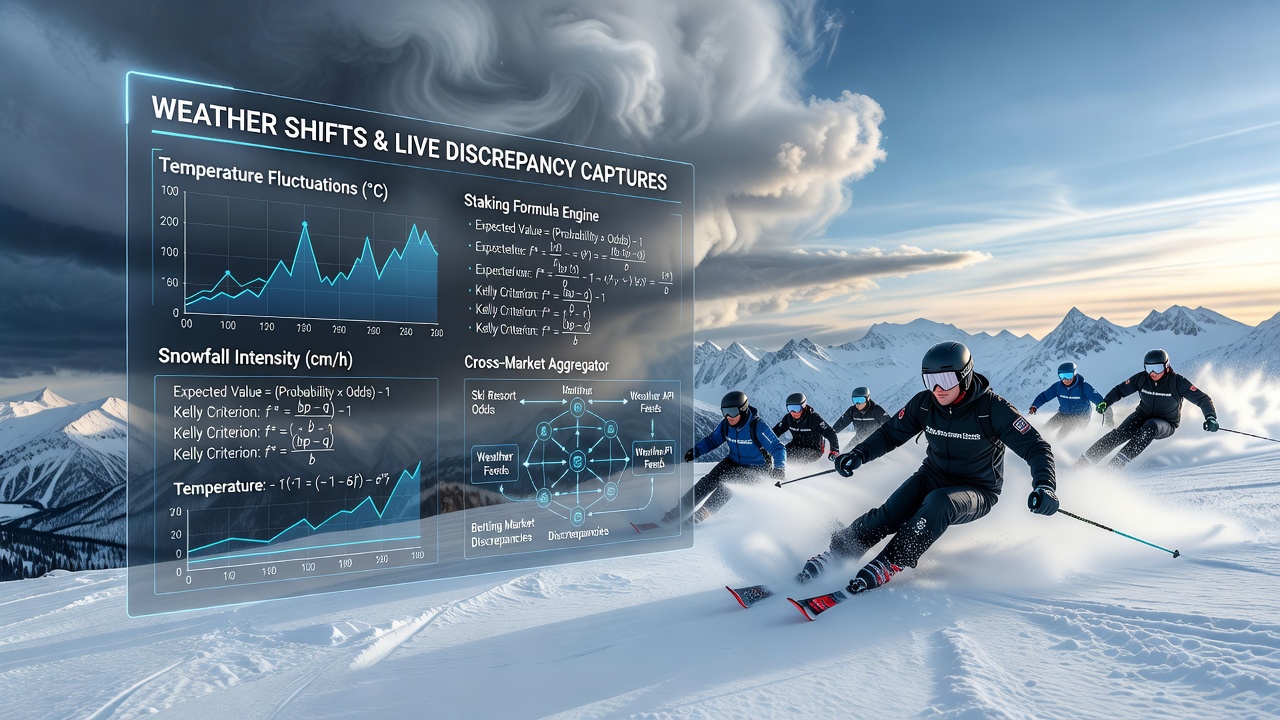
Weather variability now compresses the time frames in which live discrepancy captures occur across alpine and Nordic events, forcing adjustments in staking formulas that rely on cross-market aggregators to identify temporary misalignments. Data from meteorological agencies indicate that temperature swings of five degrees Celsius or more within a single competition window alter snow conditions fast enough to shift participant performance metrics, which in turn move odds on multiple platforms simultaneously.
How Temperature Swings Affect Real-Time Market Gaps
Observers tracking World Cup downhill and slalom circuits note that sudden warming periods soften course surfaces, increasing run times by fractions of a second that translate directly into revised probabilities for podium finishes and margin bets. These adjustments appear first on European exchanges, then propagate to Asian and North American books with varying delays, creating brief windows where aggregated feeds flag opportunities before prices realign. Aggregators compile quotes from dozens of operators, applying algorithms that filter noise from genuine discrepancies while accounting for weather-driven variables such as wind speed and visibility.
Staking formulas used in these environments scale exposure according to the duration of each window, reducing stake size when forecasts predict rapid changes and increasing it during stable cold spells. Research from institutions monitoring high-altitude venues shows that precipitation events lasting under thirty minutes still produce measurable effects on live odds, particularly in events where visibility influences starting order and course preparation decisions.
Cross-Market Aggregators and Formula Adaptations
Cross-market aggregators now incorporate real-time weather feeds from sources including Environment and Climate Change Canada alongside European Centre for Medium-Range Weather Forecasts data, allowing operators to weight discrepancy signals according to predicted snowpack stability. Those who maintain these systems report that formulas incorporating humidity and wind-chill indices reduce false positives by approximately twelve percent during shoulder seasons when temperatures hover near freezing. The integration occurs through API connections that update probability models every ninety seconds, adjusting for the fact that warmer air increases friction on ski bases and thereby lengthens typical run durations.
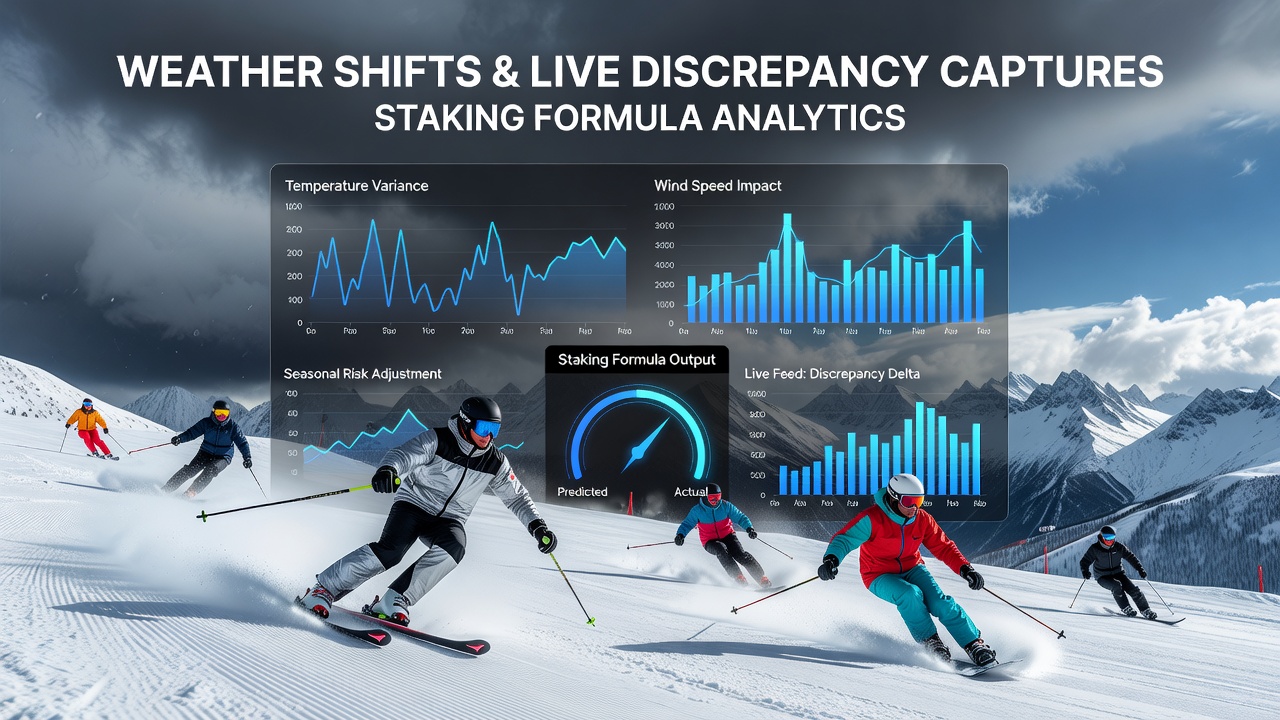
One documented case from the 2025-2026 season involved a giant slalom event in Val d'Isère where a midday temperature rise of four degrees Celsius coincided with a cluster of discrepancies across three major operators; the aggregator flagged the misalignment for thirty-eight seconds before prices converged. Staking formulas applied fractional Kelly sizing based on the remaining window length and historical convergence speed under similar conditions, resulting in measured capital allocation that avoided overexposure during the unstable period.
Regional Patterns Emerging in July 2026 Data
Figures released in July 2026 by the Australian Bureau of Meteorology highlight parallels between Southern Hemisphere winter conditions and Northern Hemisphere events, noting that similar temperature volatility patterns appear in both hemispheres when jet stream disruptions occur. Aggregator operators have begun cross-referencing these datasets to refine models that anticipate discrepancy frequency, particularly for events held at elevations above 1,800 meters where diurnal temperature swings prove most pronounced. The approach connects historical weather archives with live odds streams, producing alerts that prioritize markets least affected by rapid snow metamorphosis.
Industry reports from the European Gaming and Betting Association indicate steady adoption of these integrated tools among professional syndicates focused on winter disciplines, with emphasis on formulas that dynamically lower unit sizes when multiple weather variables exceed predefined thresholds. The result appears in narrower but more consistent capture rates across live sessions rather than sporadic large opportunities.
Conclusion
Weather-driven compression of live discrepancy windows continues to reshape how staking formulas interact with cross-market aggregators in winter sports seasons, as temperature, precipitation, and wind data feed directly into probability recalculations. Operators and syndicates that maintain current integrations report sustained access to opportunities that shorter windows would otherwise obscure, provided formulas adapt exposure levels to forecast stability. Continued refinement of these systems tracks evolving meteorological patterns while preserving objective measurement of market gaps across regions.